 Reviews


 Proudly American


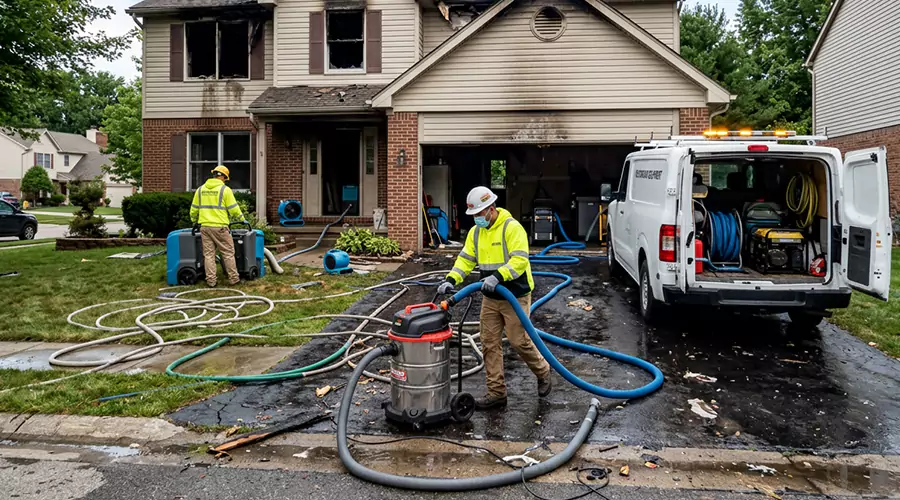
Emergency fire restoration begins by making the property safe and limiting further damage after the fire is extinguished. The early process can include temporary protection of openings and firefighting water removal. In cases where firefighting water causes additional damage, emergency water damage restoration may also be needed. Smoke containment and structural drying follow before damaged materials are removed or repaired.
The first phase is different from long-term reconstruction. Its purpose is to stabilize conditions so the property does not suffer avoidable secondary damage.
What Happens Immediately After the Fire?
The property should not be entered until fire authorities say it is safe. Once access is allowed, the first priority is identifying immediate hazards and preventing weather or water from causing more damage.
Early actions may include:
- Checking structural conditions
- Documenting visible damage
- Securing damaged doors or windows
- Covering roof openings
- Identifying standing water
- Separating damaged areas
Emergency fire restoration focuses first on stabilization rather than cosmetic repair.
How Is the Damage Assessed?
The assessment looks beyond burned materials. Smoke can affect rooms far from the flames while firefighting water can travel to lower floors.
The inspection typically considers:
- Burned areas
- Smoke travel
- Soot deposits
- Water damage
- Structural concerns
- Electrical exposure
- HVAC contamination
A good assessment divides the building into areas that can be cleaned and areas that need material removal.
What Happens to Water Used During Firefighting?
Standing water is removed once electrical and structural conditions allow safe access. Wet carpet or flooring may require extraction. Wall cavities can also need drying when water passed through ceiling or floor assemblies.
A general sequence is:
- Remove standing water.
- Extract moisture from accessible flooring.
- Remove unsalvageable wet material.
- Set up drying equipment.
- Track moisture conditions.
Water and fire damage restoration can continue for several days after visible puddles disappear.
How Is Soot Controlled?
Loose soot should be removed before aggressive wet cleaning because water can smear particles into paint. Containment also helps prevent residue from being tracked into cleaner rooms.
Soot clean up may begin with:
- Fine-particle vacuuming
- Dry sponge cleaning
- Removal of heavily contaminated debris
- Protection of unaffected surfaces
- Cleaning tools between rooms
Different fires produce different residues. Oily kitchen smoke may require another cleaning method than dry soot.
What Happens to Smoke Odor?
Odor treatment starts with removing the source of contamination. Fragrance or deodorizer should not be used as a substitute for cleaning soot or smoke-damaged material.
Smoke odor can remain in:
- Drywall
- Upholstery
- Insulation
- Carpet padding
- Cabinets
- Wood framing
Smoke remediation may continue after visible surfaces appear clean because porous materials can release odor later.
What Materials Are Removed During the Emergency Phase?
Only materials that cannot safely remain should be removed. The amount of demolition depends on heat damage or saturation.
| Material Condition | Typical Emergency Response |
|---|---|
| Light surface soot | Clean |
| Burned drywall | Remove |
| Saturated insulation | Remove when needed |
| Charred trim | Remove |
| Stable hardwood | Dry and reassess |
| Burned framing | Structural evaluation |
Fire damage removal creates access for cleaning or drying while preparing the area for later reconstruction.
What Happens During Structural Drying?
Structural drying removes moisture that remains after bulk water extraction. Air movers and dehumidifiers can be used when conditions are suitable. Moisture readings help show whether framing or subfloors are improving.
Typical drying ranges are:
| Condition | Approximate Time |
|---|---|
| Light moisture | 1 to 3 days |
| Wet drywall or carpet | 2 to 5 days |
| Multiple wet materials | 3 to 7 days |
| Heavy structural saturation | 7 days or longer |
The timeline is based on material condition rather than a fixed number of days.
What Is the Typical Emergency Fire Restoration Timeline?
The emergency phase may last a few days for a small contained fire. Larger incidents can take several weeks before reconstruction begins.
A simplified sequence looks like this:
- First day: safety assessment and stabilization
- Days 1 to 3: water extraction and initial soot removal
- Days 2 to 7: structural drying and cleaning
- Following days: odor treatment and material evaluation
- Later stage: repair planning and reconstruction
A major fire can stay in the restoration process much longer because structural rebuilding may take months.
What Can You Safely Do Yourself?
After the property is cleared for entry, documentation is one of the safest useful actions.
You can:
- Photograph affected rooms.
- Record damaged belongings.
- Keep receipts for emergency expenses.
- Avoid unnecessary contact with soot.
- Separate clean belongings from damaged items.
- Watch for spreading water stains.
Do not force open doors that appear structurally jammed. Avoid operating electrical devices exposed to fire or water.
When Should You Call a Professional?
Professional help is appropriate when the fire affected structural materials or electrical systems. Heavy soot contamination also makes household cleanup more difficult.
Professional emergency fire restoration becomes especially relevant when:
- Roof openings expose the home.
- Structural framing is charred.
- Electrical systems were affected.
- Firefighting water entered several rooms.
- Heavy soot covers large areas.
- HVAC contamination is suspected.
- Ceilings are unstable.
- Smoke odor remains widespread.
The emergency phase should make the property safe enough for the next repair stage.
What Happens After Emergency Restoration?
Once the structure is dry and contaminated materials have been removed, the project moves toward reconstruction. The repair stage can include drywall or flooring replacement.
Fire damage reconstruction may also involve:
- Framing repair
- Electrical repair
- Cabinet replacement
- Ceiling reconstruction
- Painting
- Finish restoration
Reconstruction should not cover untreated soot or damp materials.
How Can Secondary Damage Be Limited?
Fast stabilization helps stop the initial fire loss from becoming a larger water or weather problem.
Useful actions include:
- Protect roof openings quickly.
- Extract standing water.
- Isolate soot-affected areas.
- Begin drying promptly.
- Track hidden moisture.
- Keep damaged HVAC systems off.
Conclusion
Emergency fire restoration stabilizes a property after the fire is extinguished. The process starts with safety assessment before moving into water removal and soot control. Structural drying and smoke cleanup follow before damaged materials are removed or rebuilt. The emergency phase can take days or weeks depending on the loss. If structural or electrical systems were affected, professional assessment should guide the recovery before reconstruction begins.
Frequently Asked Questions
How soon does emergency fire restoration begin?
It can begin once fire authorities have cleared the property for safe access.
Does emergency restoration include rebuilding?
Usually not at first. The emergency phase focuses on stabilization and cleanup before reconstruction begins.
Why is water removal part of fire restoration?
Water used during firefighting can soak walls or floors and create secondary damage.
How long does the emergency phase take?
A small incident may take several days. Larger fires can require weeks of stabilization or drying.
Is smoke odor treated immediately?
Source cleaning begins early, but deeper odor treatment may continue after soot removal.
Can belongings be removed during emergency restoration?
Some can be moved once access is safe. Damaged belongings should usually be documented before disposal or major cleaning.